Telehealth vs In-Person Doctor Visits: When to Use Each in Australia
Quick Answer
Telehealth is ideal for prescription refills, medical certificates, follow-up appointments, and minor illnesses. See a doctor in person for physical examinations, emergency symptoms, new or worsening conditions, and anything requiring hands-on assessment like wound care or blood pressure checks.
Key Takeaways
- Telehealth works well for consultations that rely on conversation rather than physical examination
- Emergency symptoms like chest pain, difficulty breathing, or sudden numbness always require in-person or emergency care
- Medicare rebates apply to both telehealth and in-person GP consultations
- Telehealth saves an average of 30 to 60 minutes per appointment when you factor in travel and waiting room time
- Many Australians use a mix of both, choosing telehealth for routine needs and in-person visits for complex issues
Both telehealth and in-person doctor visits have their place in Australian healthcare. The challenge is knowing which one to choose for your specific situation. This guide gives you a clear framework for making that decision.
When Telehealth Is the Right Choice
Telehealth works best for consultations that rely primarily on conversation, medical history review, and clinical judgement rather than physical examination. Here are the situations where telehealth is usually the better option:
Prescription Refills and Medication Reviews
If you need a repeat prescription for a medication you have been taking, telehealth is the fastest and most convenient option. Your doctor can review your current medication, discuss any side effects, and send a digital prescription directly to your phone.
Medical Certificates
Need a medical certificate for work or study? Telehealth doctors issue medical certificates that carry the same legal weight as those from in-person visits. According to the Fair Work Ombudsman, employers cannot refuse a valid medical certificate because it was issued via telehealth.
Follow-Up Appointments
If your doctor has already examined you in person and wants to check on your progress, a telehealth follow-up is often perfectly appropriate. This applies to post-surgical check-ins, chronic disease management reviews, and treatment progress assessments.
Minor Illnesses
Common conditions like colds, flu, urinary tract infections, hay fever, and mild gastro can often be diagnosed and treated via telehealth. Your doctor will ask about your symptoms, medical history, and current medications to make a clinical assessment.
Mental Health Consultations
Telehealth has become a preferred option for many mental health consultations. Psychology sessions, psychiatry reviews, and counselling all work well via video call. Many patients report feeling more comfortable discussing mental health from their own home.
Travel and Remote Access
If you are in a rural area, travelling, or simply unable to get to a clinic, telehealth removes the geographic barrier entirely. This is particularly valuable for Australians living in regional and remote areas where GP access can be limited.
When to See a Doctor in Person
Some situations genuinely require hands-on assessment. Here is when an in-person visit is the better choice:
Physical Examinations
Anything that requires your doctor to physically examine you should be done in person:
- Skin checks and mole assessments: While some providers offer photo-based dermatology, a thorough skin check requires in-person examination
- Abdominal examinations: Your doctor needs to palpate (press on) your abdomen to check for tenderness, masses, or organ enlargement
- Joint and muscle assessments: Range of motion tests and physical manipulation require hands-on assessment
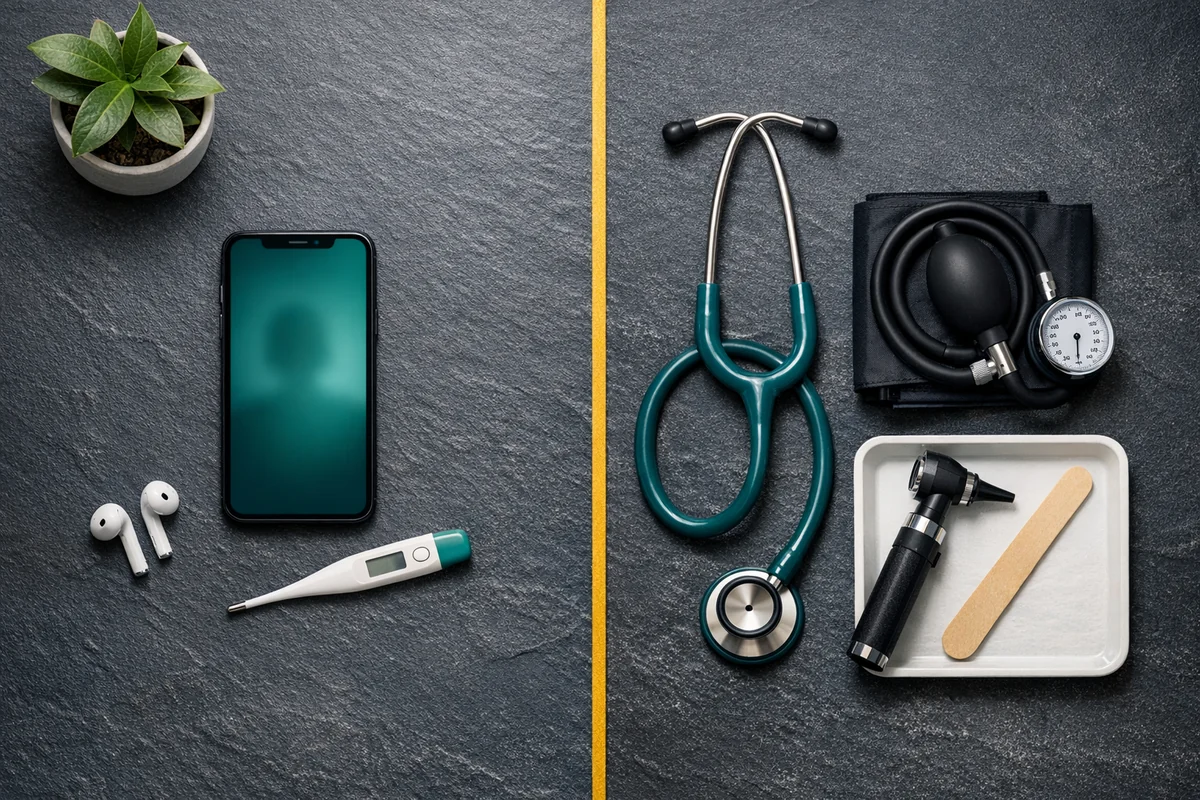
- Ear, nose, and throat checks: Using an otoscope, tongue depressor, or similar instruments
Emergency Symptoms
In a medical emergency, call 000. Do not use telehealth for:
- Chest pain or pressure
- Difficulty breathing or shortness of breath
- Sudden numbness, weakness, or paralysis
- Severe bleeding that will not stop
- Loss of consciousness
- Suspected stroke symptoms (face drooping, arm weakness, speech difficulty)
- Severe allergic reactions
New or Worsening Conditions
If you are experiencing a new symptom that is getting worse rather than better, an in-person visit gives your doctor the most complete picture. This includes:
- Unexplained weight loss
- Persistent pain that is not responding to treatment
- New lumps or swelling
- Changes in bowel or bladder habits
- Persistent fatigue without a clear cause
Procedures and Vaccinations
Anything involving needles, instruments, or physical procedures must be done in person: vaccinations, blood draws (though pathology centres handle most of these), wound dressing, minor surgical procedures, and physical therapy assessments.
A Practical Decision Framework
Use this simple framework to decide between telehealth and in-person:
| Ask Yourself | If Yes | If No |
|---|---|---|
| Does the doctor need to physically touch or examine me? | In person | Consider telehealth |
| Is this an emergency or urgent symptom? | In person (or call 000) | Consider telehealth |
| Am I following up on something already diagnosed? | Telehealth is usually fine | Depends on the condition |
| Do I need a prescription refill or medical certificate? | Telehealth is ideal | N/A |
| Is this a mental health consultation? | Telehealth works well | Either option is fine |
Cost Comparison
The cost difference between telehealth and in-person visits is often minimal in terms of the consultation fee itself. Both use the same Medicare rebate framework. However, telehealth saves money in other ways:
- No travel costs: Petrol, public transport, or parking fees
- No time off work: Many telehealth appointments can be done during a lunch break
- No childcare costs: No need to arrange care for children while you visit the doctor
- Shorter wait times: Most telehealth providers offer appointment times within hours, compared to days or weeks for some in-person GPs
According to a 2025 survey by the Australian Digital Health Agency, the average Australian saves 37 minutes per healthcare appointment by using telehealth instead of visiting a clinic in person.
The Hybrid Approach
Most Australians benefit from using both telehealth and in-person visits strategically. Here is a practical example:
- First appointment for a new issue: see your GP in person for a thorough examination
- Follow-up to review test results: telehealth is perfect for this
- Ongoing management of a chronic condition: alternate between in-person check-ups and telehealth reviews
- Prescription refills: always telehealth (no examination needed)
- Annual health check: in person (blood pressure, weight, physical exam)
This approach gives you the best of both worlds: the convenience of telehealth for routine care, and the thoroughness of in-person visits when they are needed.
What Australian Research Says
Research from the Australian Institute of Health and Welfare shows that telehealth usage in Australia increased significantly from 2020 onwards and has remained a permanent part of the healthcare landscape. Key findings include:
- Patient satisfaction with telehealth consultations is consistently above 85%
- Clinical outcomes for common conditions are comparable between telehealth and in-person care
- Telehealth has improved access to healthcare in rural and remote areas
- Mental health service access has increased significantly through telehealth availability
The evidence supports what many Australians have already discovered: telehealth is not a replacement for in-person care, but a powerful complement to it.
Medical Disclaimer
This comparison is for informational purposes only. It is not medical advice. Always consult a qualified healthcare professional for medical decisions.
Medical Disclaimer
This comparison is for informational purposes only. It is not medical advice. Always consult a qualified healthcare professional for medical decisions.